AS temperatures begin to rise, residents are reminded to be vigilant and on the look-out for parthenium weed.
Despite it being five years since the drought broke, Narrabri Shire biosecurity co-ordinator Clare Felton-Taylor said the risk is still very much alive.
“Parthenium seed longevity is up to 10 years, so the risk of seeds germinating is still likely,” Ms Felton-Taylor said.
“It remains one of New South Wales most serious weed threats.”
Not only can parthenium outcompete degraded or drought-affected pastures, reducing carrying capacity, crop yields and contaminating grain crops, it can also impact both human and animal health.


“With humans we can sometimes see respiratory problems and severe dermatitis if they come into contact with Parthenium, and while it is unpalatable to sheep, cattle and goats if they do eat any it can cause kidney damage as well as skin irritations,” Ms Felton-Taylor said.
Parthenium is prohibited matter in New South Wales, meaning any sightings must be eradicated and the plant cannot be sold anywhere in the state. Residents should not attempt to treat or dispose of this weed themselves.
“If you think you have found this plant, please report it to your local weeds biosecurity officer at Council or NSW Agriculture and Biosecurity,” Ms Felton-Taylor said.
“We will visit your property for formal identification and disposal.”
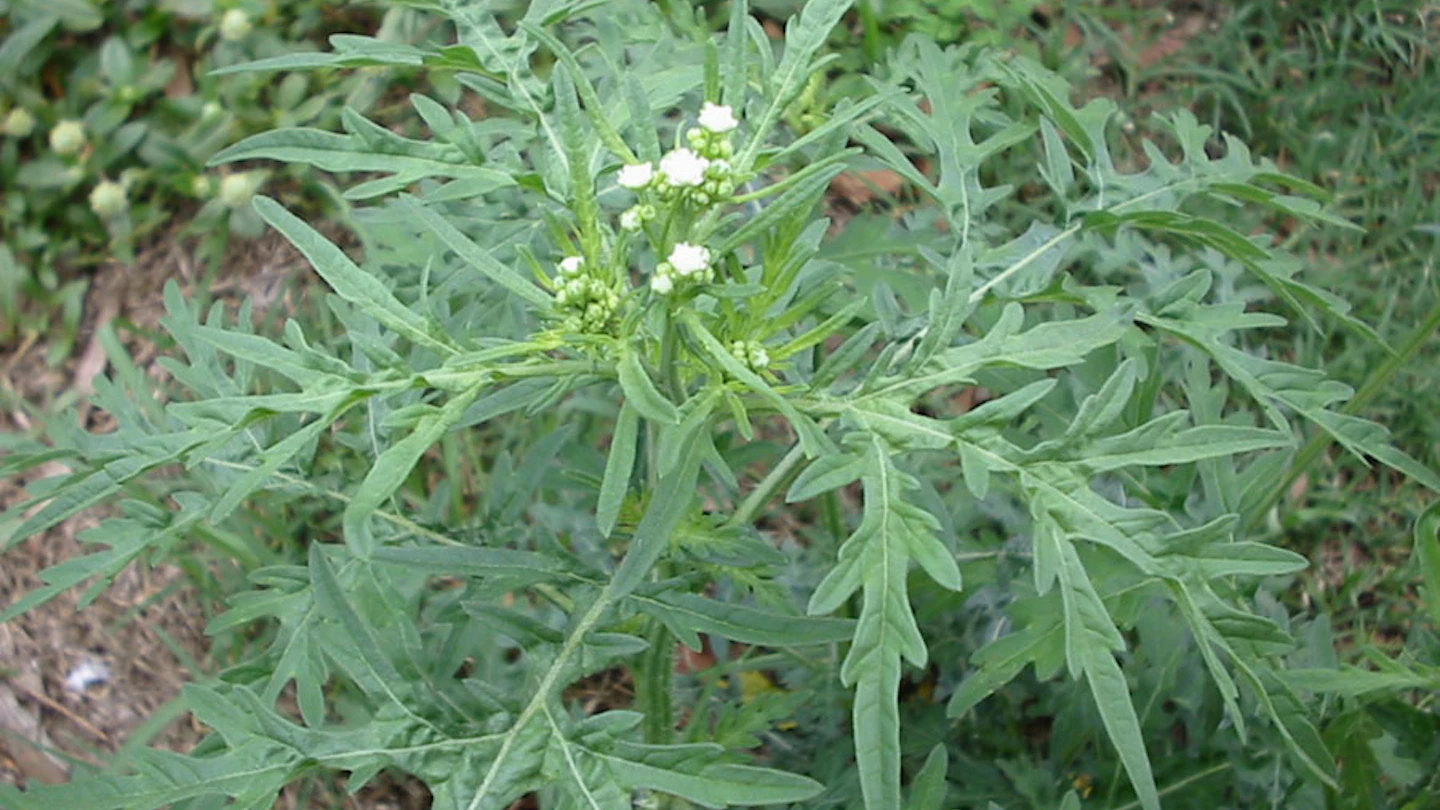
How to identify parthenium weed
Usually grows between 50cm and 1.5m, but can grow up to 2m tall;
Pale green leaves that are deeply divided into many irregular lobes and covered with soft fine hairs;
Flowers are creamy white, star-shaped with five notches around the floret; and
Look-a-like plants include bishop’s weed and Queen Anne’s lace, annual ragweed and sticky florestina.
Further information can be found at Weed Wise.