BEING Dutch didn’t help.
In 1965, university student Machteld Hali joined an activist group called Student Action for Aborigines and went on a history-defining bus journey across outback New South Wales.
The 15-day trip changed her life forever – as well as the lives of tens of thousands of indigenous people around Australia.
Machteld was 18 when 29-year-old Charlie Perkins and 19-year-old Jim Spigelman got a group of 29 students together – known as SAFA – and visited towns across New South Wales and southern Queensland.
The purpose of the trip was to expose the squalid living conditions of Aboriginal people and the appalling racism and discrimination they suffered.
SAFA’s goal was to create public awareness in the broader population and, as the bus travelled from one country town to the next, the group witnessed incredible hardship and systemic racism and segregation – and they told the world about it.
Machteld Hali, a lino and woodblock printmaker, was born in Holland, raised in Indonesia, and now lives at Kiama on the south coast of New South Wales with her husband, Shane.
Machteld’s family came to Australia in 1956 and suffered racism – they were from Holland, were considered ‘different’ and could barely speak English. They were outcasts in a strange country.


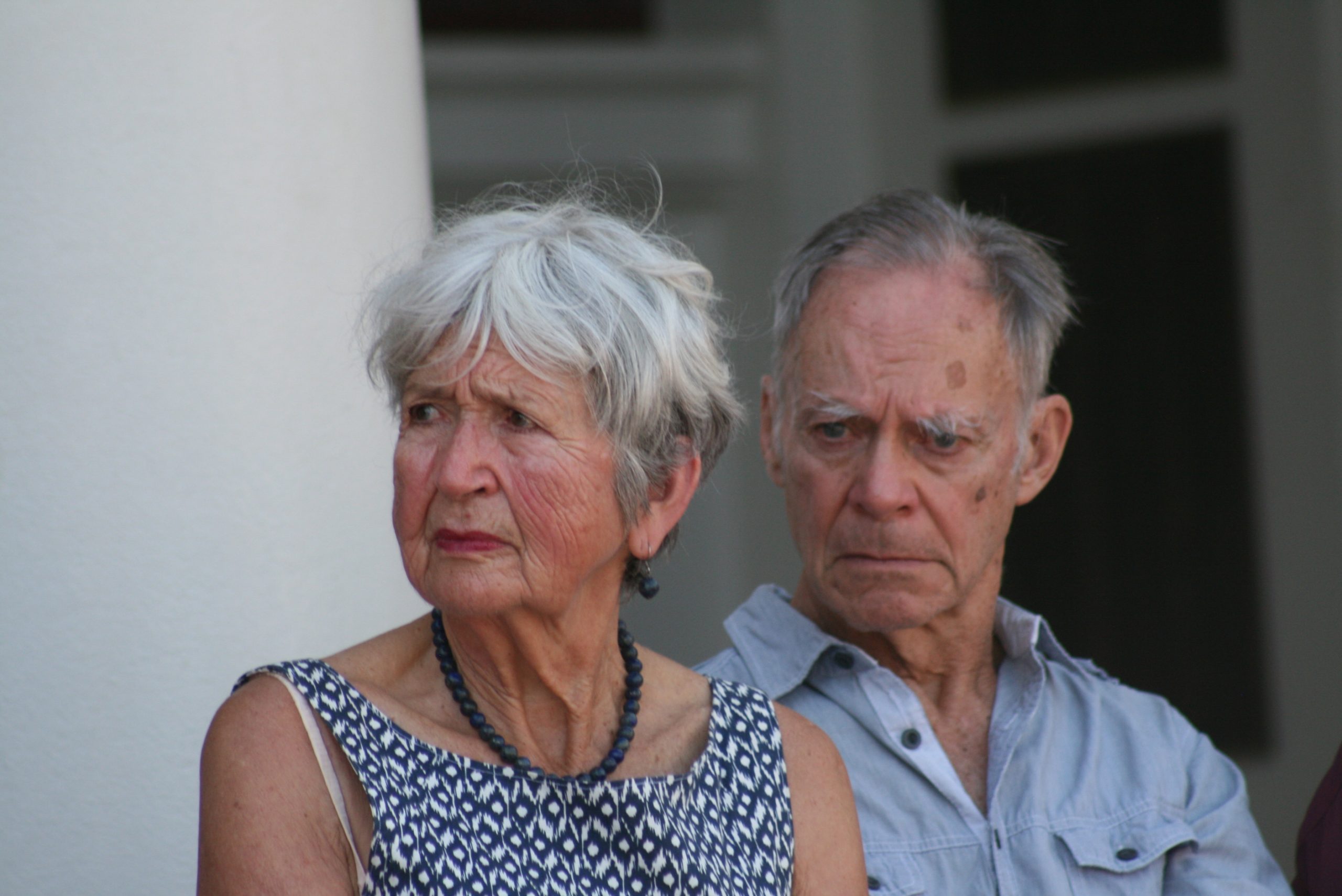
Machteld and Shane were in Moree on Wednesday to commemorate the 60th anniversary of the 1965 Freedom Ride.
They joined hundreds of locals as well as visitors from across Australia on the steps of Moree War Memorial Hall to pause and remember a journey that changed – and saved – the lives of Aborigines nationwide.
“Part of the reason I was there (in 1965) was because I’m a migrant myself, and was seeing quite a lot of discrimination when I first came to this country,” Machteld said.
“That gave me empathy for the plight of the Aboriginal people. I was basically a tag-along on the bus. I wasn’t one of the organisers. I was very young, but went along because I believed in justice. The spirit of the 1960s was that we believed in justice, but we had no idea about what we were to encounter.
“It was a shock to see the way some of the Aboriginal people were living in some of the shanty towns,” she said.
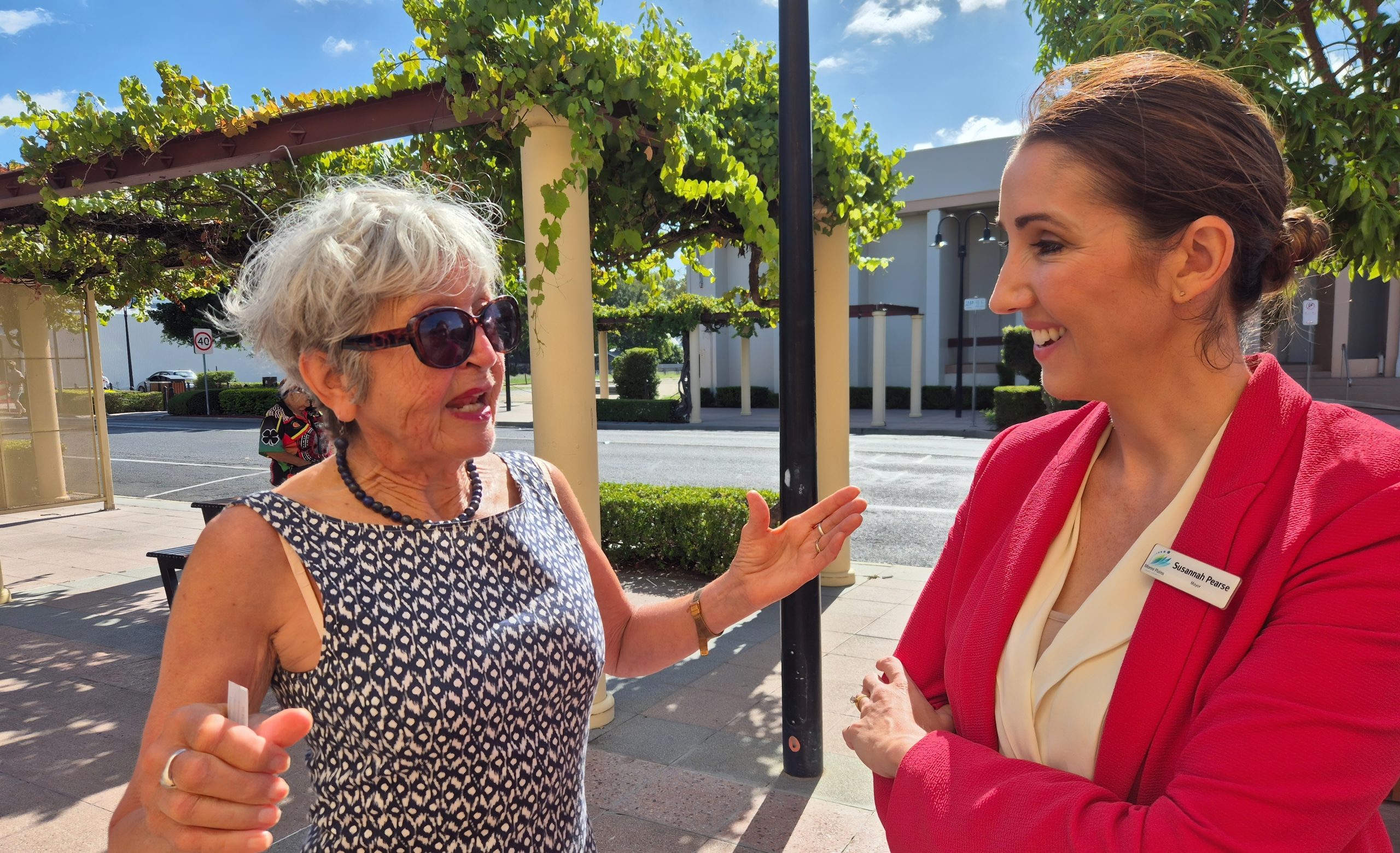
Machteld said the highpoint of the trip happened in Moree, at the local swimming pool.
A bylaw established 10 years earlier by Moree Municipal Council stated Aboriginal people were not permitted to enter to complex, known then as Moree Bore Baths.
“The climax of the whole trip was here, at the Moree swimming pool when we encountered so much anger,” Machteld said.
“There was a huge crowd of very, very angry people with boxes of eggs and tomatoes. We were pelted and driven out of town.
“But looking back, it caused a paradigm shift and there are Aboriginal women now who throw their arms around me and say ‘you changed our lives, and you told us we mattered’.
“I’ve heard that so many times,” Machteld smiled.
“The Freedom Ride was instrumental in helping Aboriginal people gain some sort of identity. And, of course, there was the referendum two years later and the whole situation snowballed.”
Wednesday’s ceremony on the steps of Moree War Memorial Hall – a building Aborigines were not permitted to enter 60 years ago – brought back memories, tears and reflections of a time when Moree was divided by colour.
“Today is very much a celebration of what has been achieved. Aboriginal people have this strong sense of belonging,” Machteld said.
“But we’re not there yet. There are a lot of things that are not right, that we have to make right, and I want to be a part of that,” she said.
Words and Images: Bill Poulos