SINCE 1788, there have been countless incidents of violence inflicted on Australia’s First Nations People.
Collectively referred to as The Frontier Wars, this covers massacres, wars and resistance.
While the true number of deaths will likely never be uncovered, more than 10,000 people were killed in massacres and some of the most notorious were in Kamilaroi country, around Moree.
While the last documented massacre in Australia was in 1928, the toll from the Frontier Wars continues.
A research team will be in Moree this month to engage with the community through a workshop, Healing Through Truth-Telling Towards a Vision for Community Unity, at the Dhiiyaan Centre.
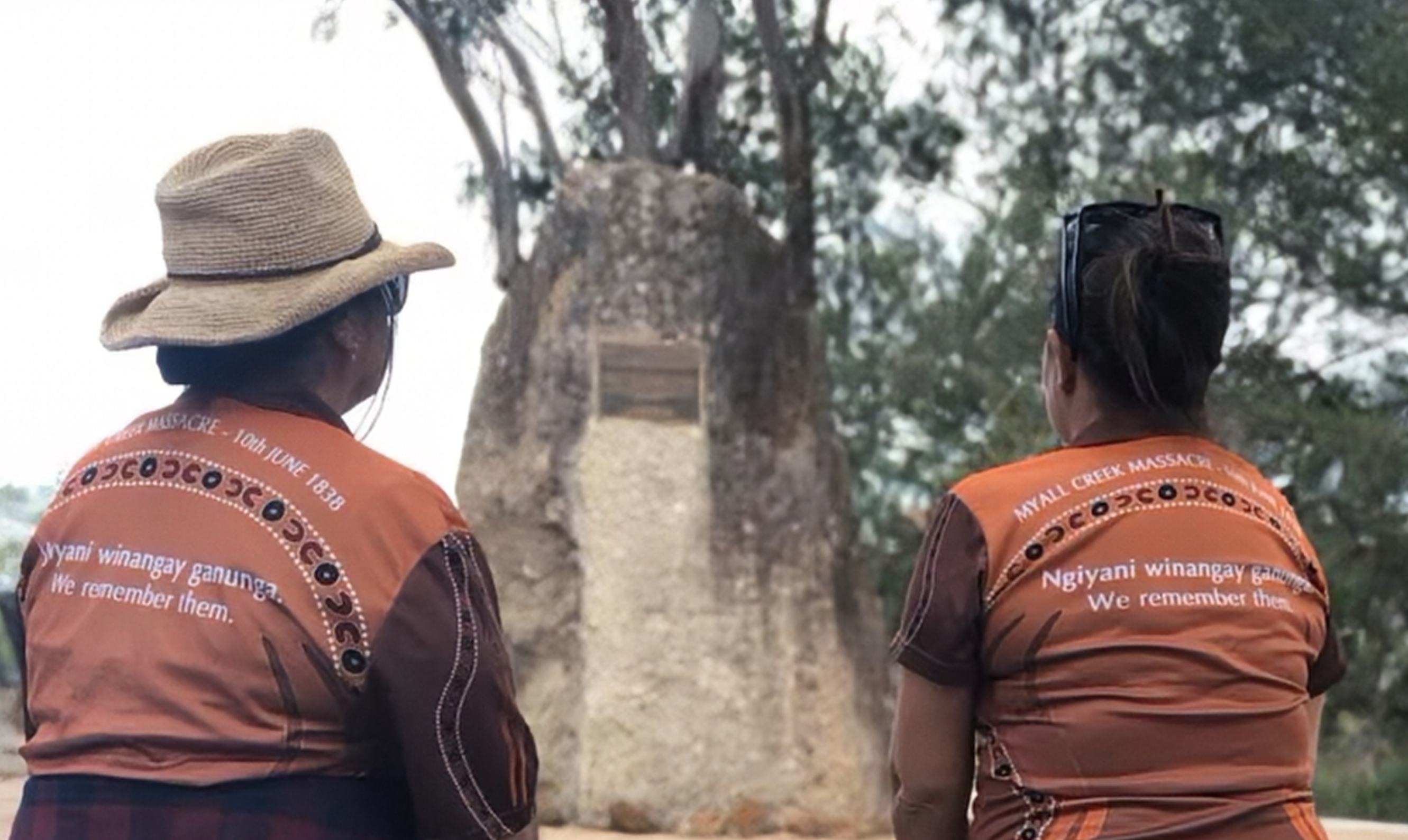
One tragedy to be discussed will be the Myall Creek massacre – a day of infamy forever stamped in the annals of Moree and district history books.
It was a day of shame.
On June 10, 1838 a group of at least 28 unarmed Aborigines, including women, children and elderly men, were murdered in cold blood by a group of convict stockmen at Myall Creek, near Bingara.
The victims were members of the Wirrayaraay, a tribal clan of the Kamilaroi people.
They had arrived at Myall Creek Station a few weeks earlier for safety, and were known to the settlers working on the place.
They trusted stockman Charles Kilmeister but he would betray them.


Marauding stockmen were known to roam the district, slaughtering innocent Aborigines.
The men, led by head stockman John Fleming from Mungie Bundie Run near Moree, arrived at Henry Dangar’s Myall Creek Station with murder on their mind.
The premeditated trip was planned to coincide with the absence of station manager William Hobbs.
Apart from sickening gratification, there was no reason to harm the Aborigines.
The group of Wirrayaraay people were invited – more likely, lured – to Myall Creek Station by Kilmeister, who turned against them and joined the murderous party.
Station hut keeper George Anderson was told by one of the group, John Russell, they were going to take the Aborigines “over the back of the range and frighten them”.
Anderson refused to join the party and later gave damning evidence at the trial of the accused murderers.
After the massacre, the bodies of the victims were piled up and burned and the remains of at least 28 corpses were found.
The final death toll, however, has never been confirmed.
When station manager William Hobbs returned to Myall Creek Station and discovered the bodies, he was determined to report the matter.
However, he was strongly dissuaded by Kilmeister.
Hobbs discussed the matter with neighbour Thomas Foster who passed on the information to squatter Frederick Foot.
Foot rode to Sydney and reported the massacre to newly-appointed New South Wales Governor George Gipps, whose subsequent investigation was supported by Attorney-General John Plunkett.
Gipps directed Muswellbrook Police Magistrate Edward Denny Day to investigate.
George Anderson’s testimony was crucial to the case and he identified the arrested men as the murderers.
He was sacked from his position at Myall Creek Station by owner Henry Dangar, who had gathered a group of local land-holders from the Gwydir district to finance the charged men’s legal defence.
The Dangar family were well-known and influential pioneers of New South Wales.
Henry Dangar arrived in New South Wales on the Jessie in early 1821, when he was 23 years old.
He was appointed assistant surveyor to New South Wales Surveyor-General Thomas Oxley and worked on the early planning of the city of Newcastle.
However, he was later suspended from duties by Governor Ralph Darling over land claims made on behalf of his brother, William.
Dangar returned to England to fight the charge however the Colonial Office found in favour of the Governor.
Dangar sailed back to New South Wales and found employment as a surveyor with the Australian Agricultural Company – but controversy followed him.
He led a series of expeditions across New South Wales, notably on the Liverpool Plains as well as the Peel and Namoi regions, but was embroiled in alleged greedy land grabs.
Newly-appointed Surveyor-General Thomas Mitchell protested strongly when Dangar lodged claims for huge tracts of land.
Mitchell’s views were upheld and he demanded individual settlers be given an opportunity to farm the land.
Dangar resigned from the Australian Agricultural Company in 1832, six years before the Myall Creek Massacre, and built up a vast land portfolio.
He held thousands of acres of prime grazing and farming country at Myall Creek, Karee, Bulyeroi, Moonbi, Bald Hills, Paradise Creek and Armidale.
At the second trial of the men involved in the massacre at Myall Creek – the first was allegedly a farce with all defendants acquitted – seven of the 11 defendants were found guilty of murder.
After the verdict was announced Judge Burton addressed the guilty men.
“Prisoners of the bar, you have been found guilty of the crime of murder by a jury of your countrymen . . . you have been sent to this colony for some crime committed at home; you have all lost your liberty for some cause or other, through some of you have since regained that liberty by service; you are well-acquainted with the law which says, that whoever is guilty of murder shall suffer death. The law is no conventional law, no common rule of life formed for human purposes; it is founded on the law of God.”
Judge Burton continued: “In that hut the prisoners, unmoved by the tears, groans, and sighs, bound them with cords, fathers, mothers, and children indiscriminately, and carried them away to a short distance, when the scene of slaughter commenced, and stopped not until all were exterminated, with the exception of one woman.”
On December 18, Charles Kilmeister, James Oates, Edward Foley, John Johnson, John Russell, William Hawkins and James Parry were publicly hanged at Sydney Gaol.
The accused found not guilty included alleged ring-leader John Fleming, who later became a farmer and church warden in the Hawkesbury district.
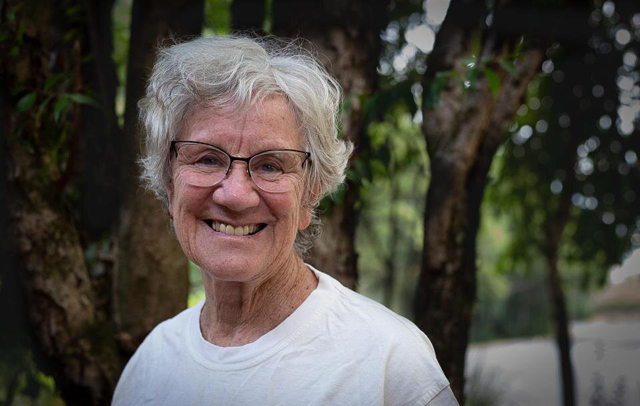
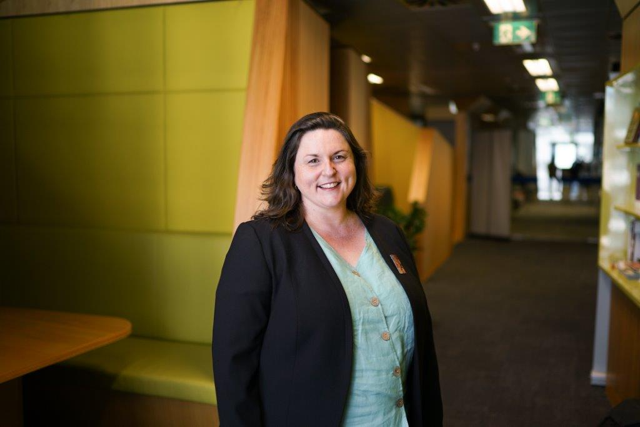
The cross-disciplinary and multi-institutional research team coming to Moree is continuing a project launched last year to better understand the ongoing trauma and impact of historical massacres like the Myall Creek tragedy that still hurts nearly 200 years later.
The team includes lead investigators, associate professor Michelle Evans (Koori), professor Judy Atkinson (Jiman-Bundjalung), Dr Ash Francisco (Wiradjuri), along with associate professor Julie Moschion, and Dr Angela Chen.
Renowned historian, professor Lyndall Ryan, was an esteemed member of the team until her passing last year.
Building on the work of professor Ryan, the team held focus groups in Moree in May last year to gain a picture of the impact of past practices on the present-day experiences, as well as looking to the possibilities of the future.
“The toll from the Frontier Wars continues to this day through the intergenerational impacts which we see reflected in health, employment and social outcomes for First Australians,” Dr Chen said.
Team members will return to Moree to continue engagement with the community through a workshop, Healing Through Truth-Telling Towards a Vision for Community Unity.
They will conduct the workshop with an aim to foster truth-telling and collectively explore
how sharing truths can play a role in helping to collectively envision a unified community.
The workshop will offer an opportunity for Aboriginal and non-Aboriginal members in the Moree community to come together through dialogue and collaboration.
Invitations are cordially extended to Aboriginal and non-Aboriginal members of the community to attend the Tuesday, February 18 workshop from 9.30am to 12.30pm.
The workshop will take place at the Dhiiyaan Centre, Moree.
For more information or to RSVP for the workshop, please contact dilinduwa@unimelb.edu.au.
Healing Through Truth-Telling Towards a Vision for Community Unity
When: Tuesday, February 18
Where: Dhiiyaan Centre, Balo Street, Moree (old town library)
Time: 9.30am to 12.30pm