IN the 1950s, getting to class at Pallamallawa Public School was considered a bigger task than actually undertaking a day’s learning.
Kids would be up at dawn to get chores done. After breakfast, and a lean one at that, they’d line up at the front gate and jump on a horse-drawn ‘school bus’ as it wended its way from property to property.
In fact, just about every kid living on outlying properties across the north and north-west were doing pretty much the same thing to get to school – and get home again afterwards.
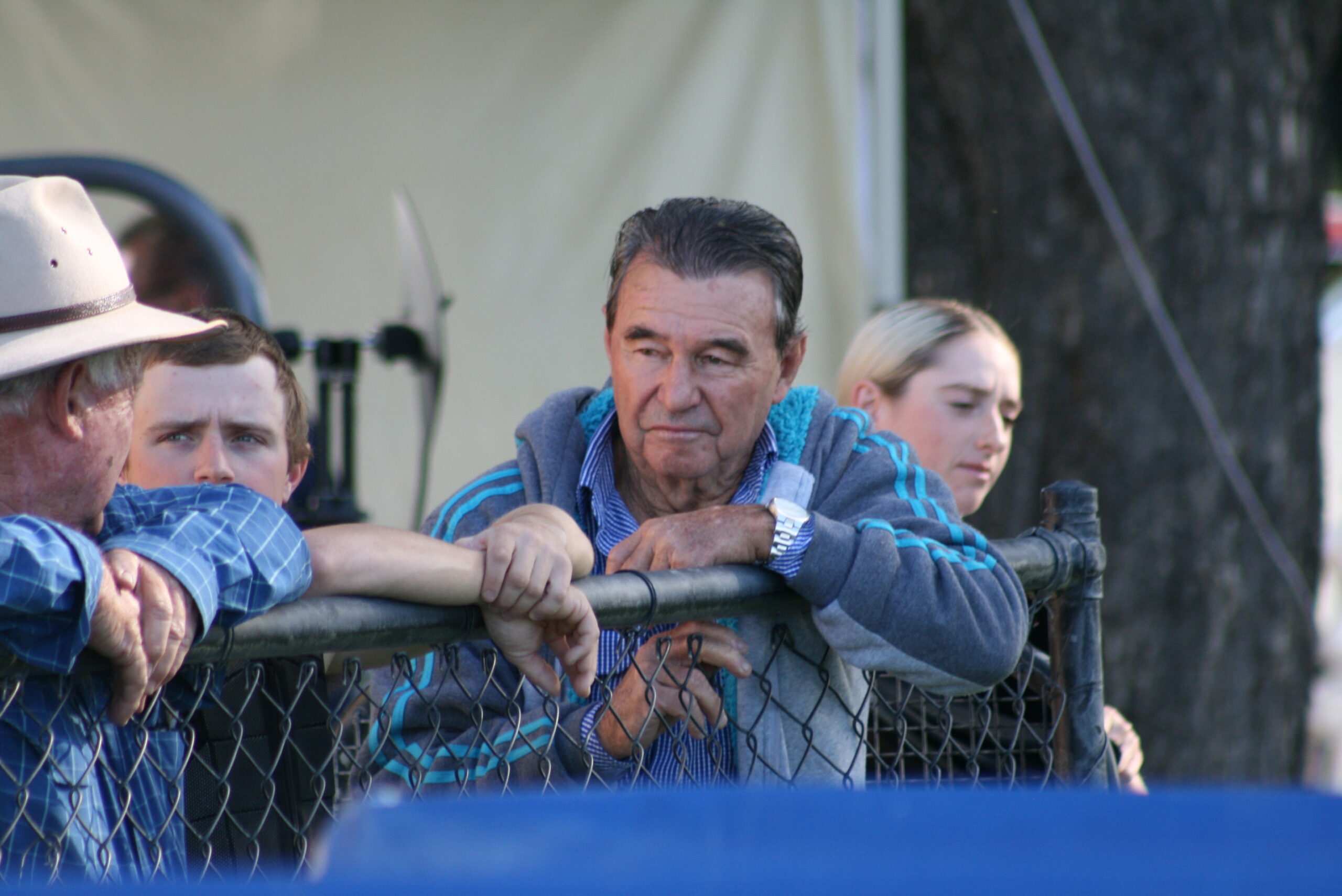
Les Quinn, 80, remembers the morning travel arrangements like it was yesterday.
During the 1950s, Les and his brothers and sisters, as well as a few kids they collected along the way, travelled to school and back by horse and sulky each day.
“The bus would leave Pally, go across Macey’s Crossing, past what is now the pecan nut farm – where old Wint Quinn lived – and pick up all the Biniguy kids,” Les said.
“When I say ‘bus’, I mean a horse and sulky, but it was very economical. There were no fumes, especially if you were right down the back,” he winked.


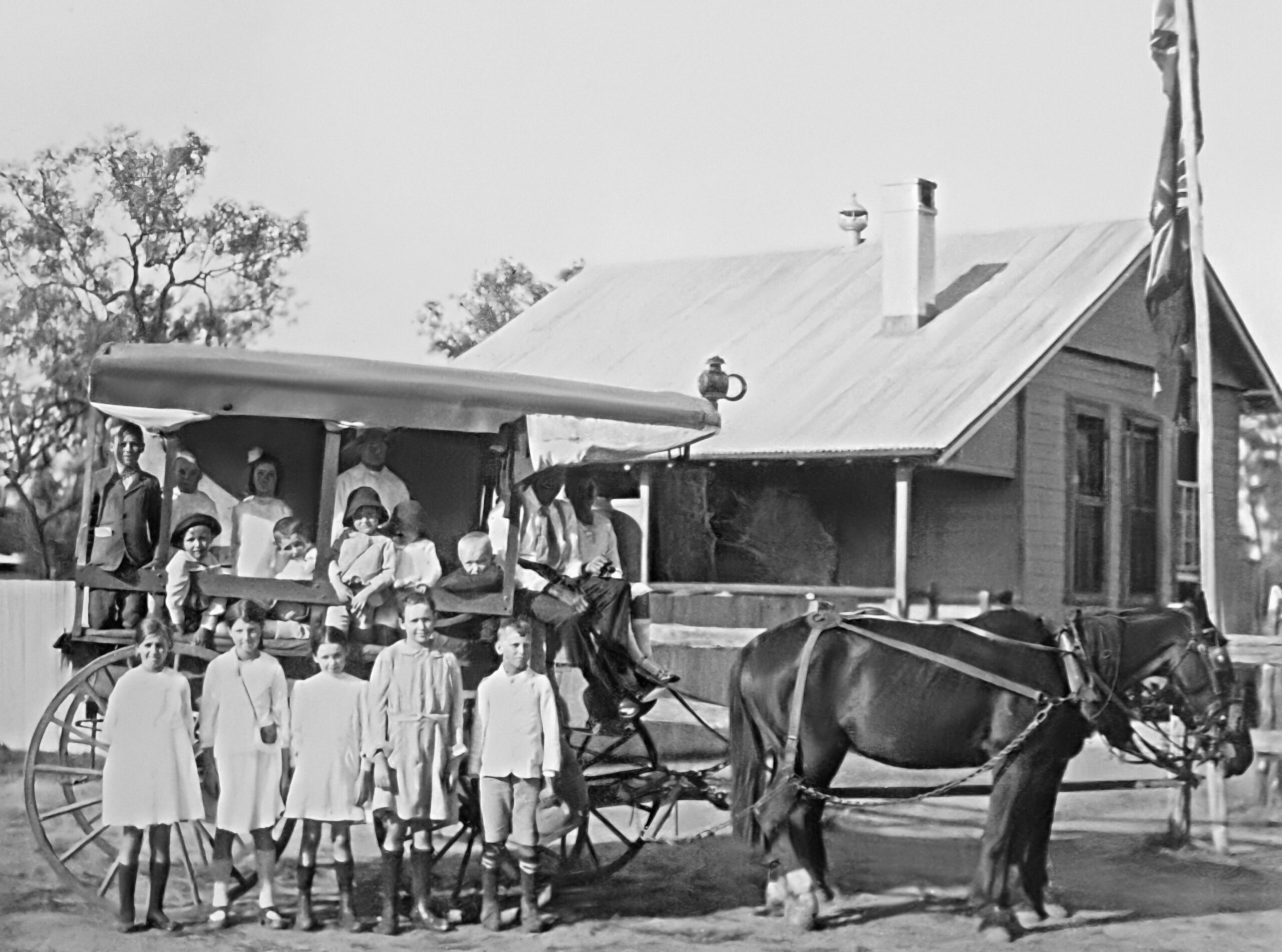
“We’d go through Burwood and across Manchee’s paddock and into school. The whole trip was six or seven miles, and we lived about two-and-a-half miles away. We were pretty much the last on, and first off.”
Students used this mode of transport every school day, rain, hail or shine.
“When the river was up, we’d go over the bridge, and the horses didn’t go much on the bridge,” Les said.
“I do know one thing – we never got to stay home if it was too wet. Those old horses would go through the mud, no worries.
“A little later, when dad bought a house at Biniguy and we moved from Burwood, we upgraded to actual school buses.”
Les would get home from school at about 4.30pm – ready for afternoon chores.
“We were a big family, there were eight of us, and we all had to get home and do our work,” Les said.
The Quinn children were taught by several teachers at the Pally school, including Alistair Cox, Steve Ryan and Billy Laird.

But Les’s favourite was Ray Cavenagh, who, decades later, rose to the position of deputy president of the NSW Teachers’ Federation.
“Mr Cavenagh had a crewcut and wore big rubber-soled shoes, and he’d put his feet up on the desk and blow smoke rings while we were doing our schoolwork,” Les recalled with a smile.
“There was a big jar on his desk, and if any kids came to school with lollies, they’d have to put them in the jar and everyone would share them later.
“Mind you, there weren’t too many good memories,” Les chuckled, “because the Pally kids didn’t go too much on the Biniguy kids – we had to learn to look after ourselves.
That’s where Mr Cavenagh stepped in to sort out schoolyard arguments.
“If two kids got into a blue, Mr Cavenagh would put all the kids under this massive, big pepper tree and make us form a circle,” Les said.
“The kids who were fighting were given boxing gloves and Mr Cavenagh would referee a second fight.
“If the same kid got a hiding again, Mr Cavenagh would tell the other kid it was now his job to look after the kid who lost the fight.
“He’d tell the kid ‘if I see you touch him again, you’ll put the boxing gloves on against me. You know you can beat him, so from now on, don’t touch him. You’re bigger than him, so don’t do it again – you’ll jump back in the ring with me if you do’.
“Mr Cavenagh put a stop to all the bullying. there was no such thing at our school.”
Les recalled the time all the kids ran home from school, thinking Mr Cavenagh had been killed.
“One of the girls, Joanie Goodworth, accidentally knocked him out with a baseball bat,” Les laughed. “Joanie was a really good athlete and could run like a scalded cat. We used to play with a bat and tennis ball and when Joanie whacked the ball, Mr Cavanaugh was waiting to catch it.
“Anyway, Joanie hit the ball, threw the bat and started running. The bat went dead straight and hit Mr Cavenagh on the forehead. A big lump came up and he went out like a light. We all ran home and told our parents Joanie Goodworth had killed the teacher – there was no-one at school for the rest of the day.”
Mr Cavenagh, who later taught at French’s Forest, survived the wayward baseball bat and went on to instil some valuable life lessons to the kids at Pallamallawa Public School.
“He was a great teacher – the sort of teacher that made the kids want to go to school,” Les said.
“They were the good old days, and we learned things a little differently to the way things are taught today.”
Les can think himself lucky the horse-drawn commutes largely went without incident.
In 1909, school headmaster Alf Dalby – appointed the previous year – and four students escaped serious injury when travelling to school by horse and sulky.
The horse, a mare that was generally quiet according to the headmaster, started kicking and bucking savagely.
The sulky was dragged along the side of the road for more than 300 yards, narrowly missing fences and trees, and was eventually reined in by Mr Dalby and brought to a halt.
Walter Cupples, from the nearby property Oaklands, heard the children screaming. He jumped on his horse and galloped across to help.
“When the mare was being freed from the sulky, she began to kick again and eventually freed herself by smashing both shafts. Fortunately, not one of the occupants received the slightest scratch,” reported the Moree Gwydir Examiner and General Advertiser.
The Pallamallawa Public School is steeped in history.
A proposal to build a school in the village was lodged in 1883 and builder William Lee from Barraba was awarded the contract when his quote for £381 was accepted.
Lee and two apprentices, Jack Moore and Jack McKechnie, constructed the wooden building and the school was officially opened on August 11, 1884, with more than 20 students attending.
Apprentice Jack McKechnie was the father of Bill McKechnie, who went on the become one of the Moree region’s biggest shearing contractors. He was also a longstanding advocate for Moree and District Hospital for most of his adult life.
“A good (student) attendance was present at the opening, which has since increased. The inhabitants of the little township rejoiced over the event, and celebrated with a picnic and ball,” reported the Australian Town and Country Journal.
The school’s first teacher was Robert Chapman, who was later replaced by Norris Adams in 1887.
Mr Adams, from Sydney, was a first-class cricketer and also established night classes at the tiny bush school.
Mary Egan was appointed in 1889. Miss Egan, from Ireland, also gave piano lessons after school and was highly respected in the district.
“She surrounded herself with a friendly atmosphere and was a citizen of which the little village had every right of which to be proud,” chronicled historian Charles Boughton.
Miss Egan transferred to Moree in 1898 and was replaced by Stephen Fitzpatrick from Oakey Creek, near Moonbi.
In 1891, the school underwent minor repairs and extensions and, by the 1930s, regularly had more than 100 students at roll-call.
In April, 1937, State Minister for Education, David Drummond, arrived in Pallamallawa to officially open the newly-built teachers’ residence.
Mr Drummond, a big man with a powerful voice, was met by District Schools Inspector Norman Drummond.
The men were not related, but followed similar career paths in the education system.
David Drummond was NSW Minister of Education between 1927 and 1930 and again between 1932 and 1941.
Norman Drummond was Inspector of Schools from 1935 and later NSW Director of Primary Education.
Also at the opening was Country Party Member for Barwon, Ben Wade, and school officials Bill Harris and George McKenzie, and Mr McKenzie’s father-in-law, John Maunder.
The school delegation used the opportunity to request more teaching staff for the school, however Mr Wade declined.
“The average attendance does not warrant another teacher, but if the good residents of Pallamallawa can do their best to increase enrolment, I will consider the request at a later date,” he said.
He then declared the new residence open and handed the keys to Bill Harris.
“I’ve opened quite a few new schools, but not many houses,” Mr Wade quipped.
Many outstanding students graduated from Pallamallawa Public School down through the decades.
Charles Boughton in 1951 wrote of the scholars who “have come and gone and made names for themselves in various fields and activities”.
An interesting entry was Gordon McCaw, a Pallamallawa pupil in the early 1920s.
In 1931, McCaw went to the United States and became headmaster at a school in Henderson, Nevada.
In 1950, he returned to Australia when he and his wife, Elsie, won a quiz on national American radio.
By knowing the correct answer to an obscure question, McCaw won an overseas trip of his choice and chose Australia. Incredibly, a couple of weeks later his wife won the jackpot prize on the same quiz show.
“The pair had one day’s notice to prepare for their big trip to Australia. In an interview in the Women’s Weekly, they let readers know Mr McCaw had not forgotten Pallamallawa,” Boughton penned.
While Gordon McCaw is remembered as one of Pallamallawa Public School’s students to later teach overseas, arguably the school’s best-known teacher was Ray Cavenagh, who taught Les Quinn in the 1950s.
Cavenagh climbed the ranks of the education system and retired as the NSW Teachers’ Federation’s deputy president in 1995 after holding the position for nearly 10 years.
The then-Minister for Education and Training, John Aquilina, said: “Ray is enormously passionate about public education and equity. This comes across whether you are discussing education policy or bartering over the negotiation table. He certainly is one of the great characters of the federation and I wish him all the best in retirement.”
Federation president Phil Cross said Cavenagh “never abandoned his dreams because of those who lacked his vision”.
“Ray was a delight to work with. His sense of humour and renowned ability at political satire brightened many a day. In Ray, I had the privilege of working with a trusted colleague and friend who has made an outstanding contribution to the federation and public education,” Cross said.
Words and Images: Bill Poulos